
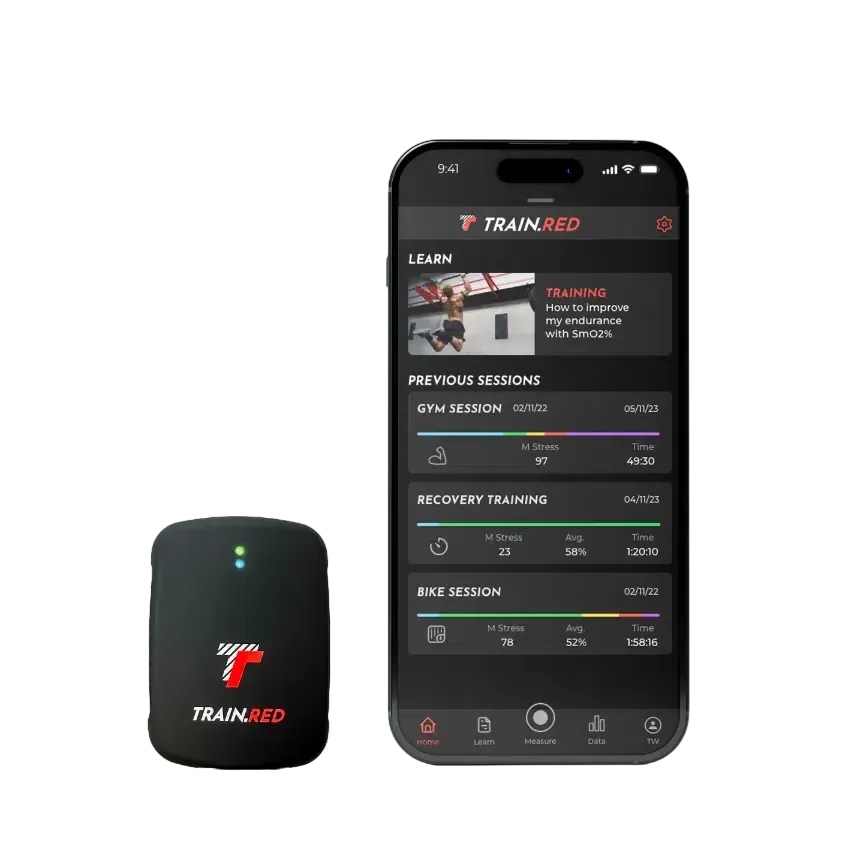
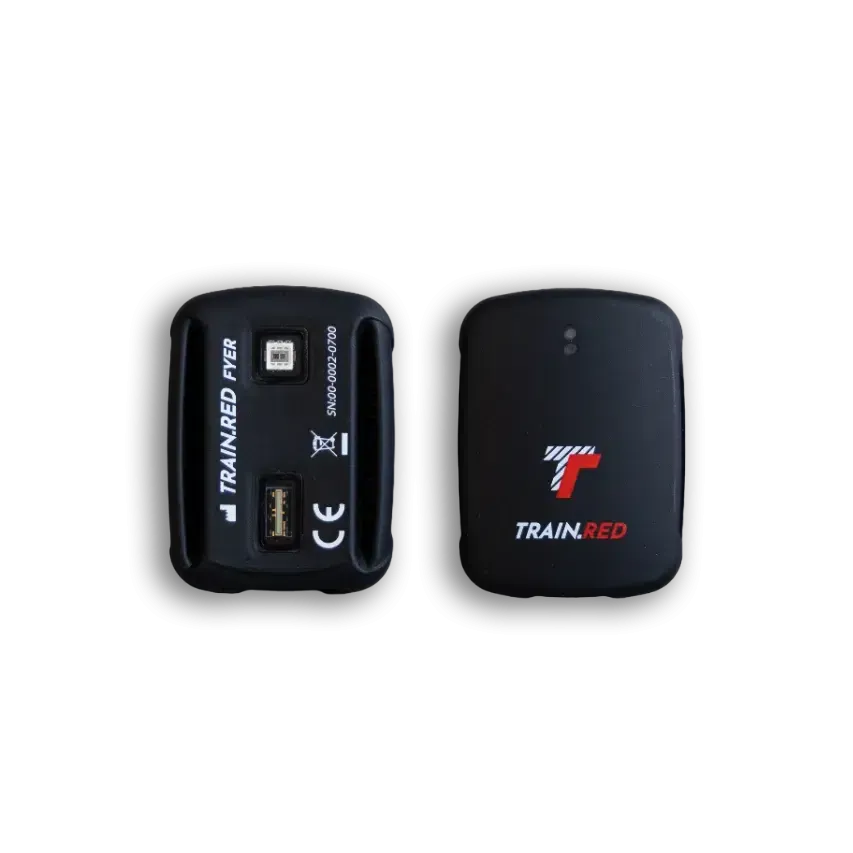
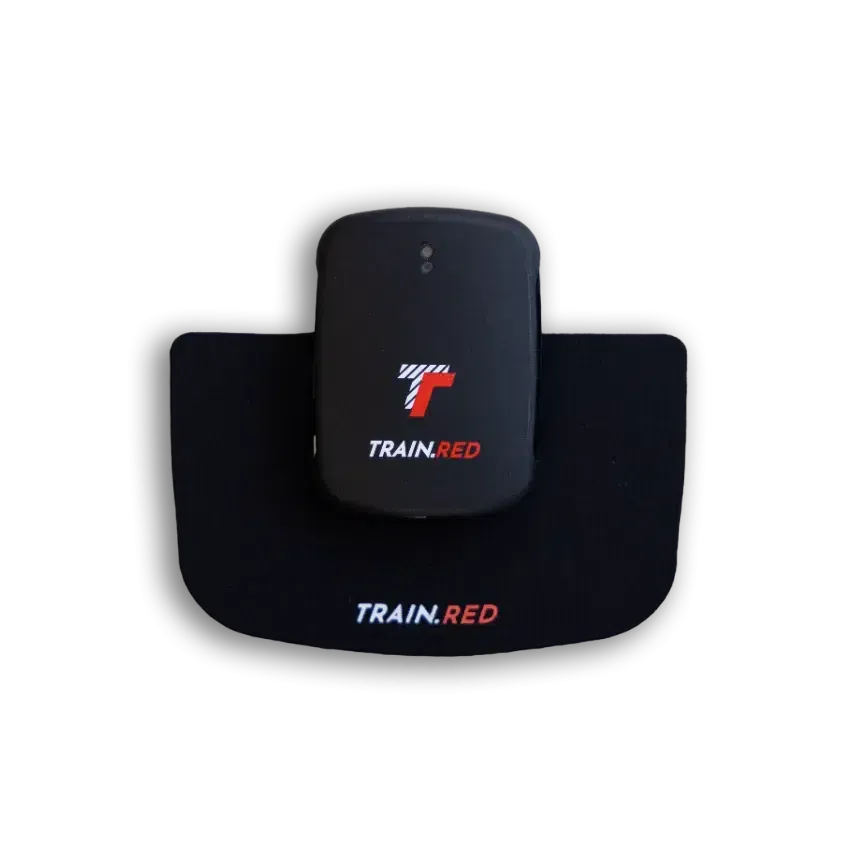
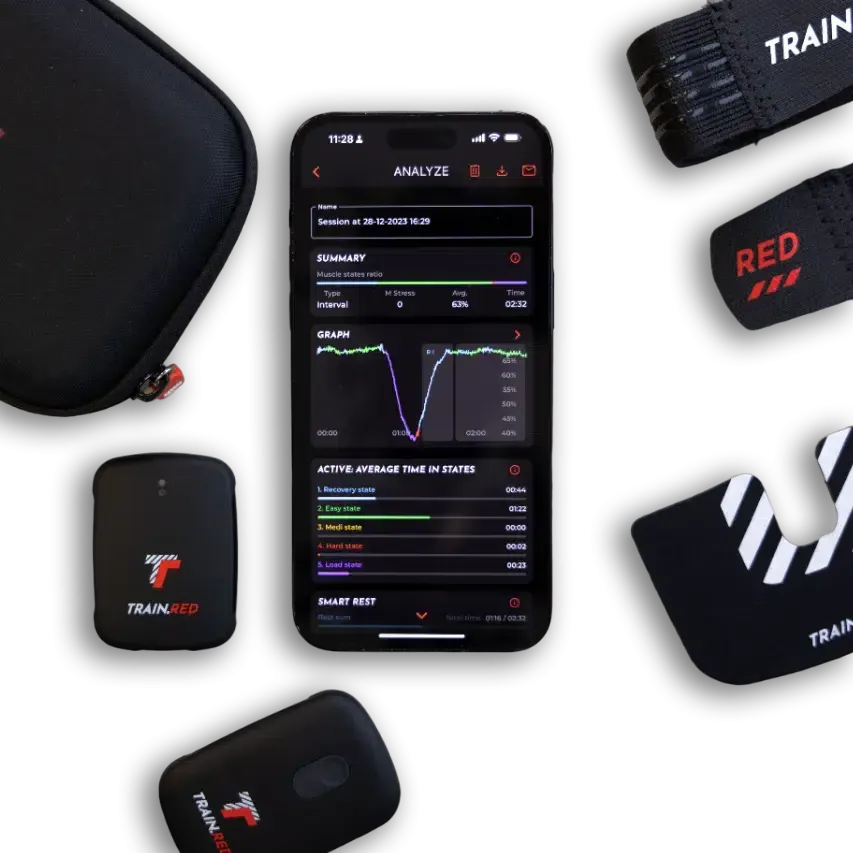
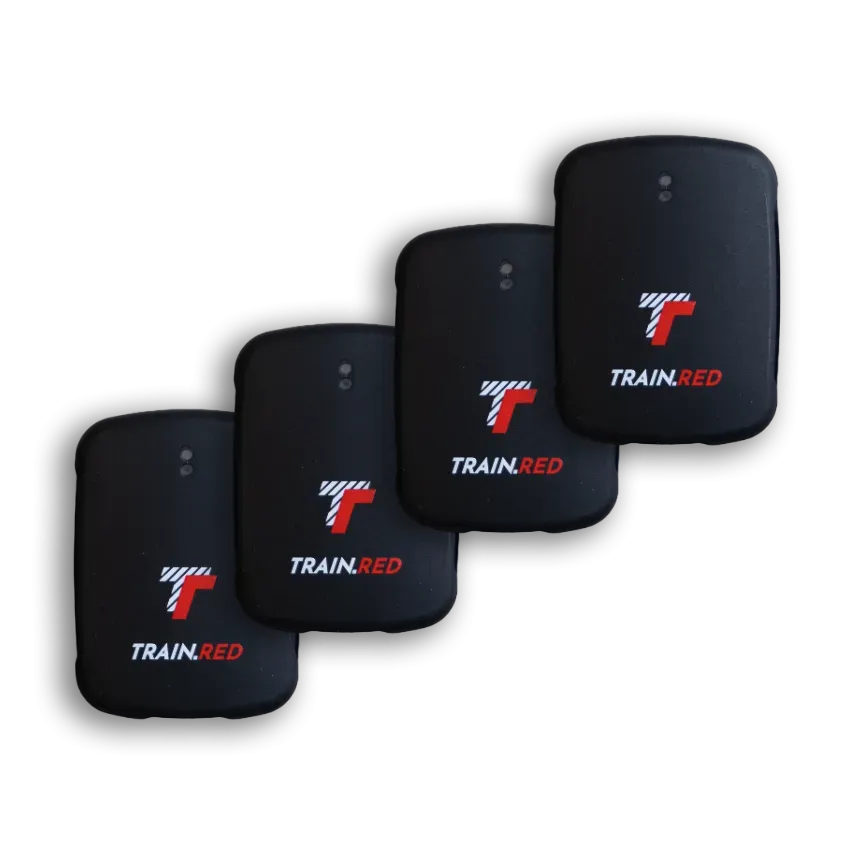
Train.Red FYER Sensor
Build your own SmO2 baseline
- 1x Flyer
- Charging Cable
- Free App
New to muscle oxygen, guided start
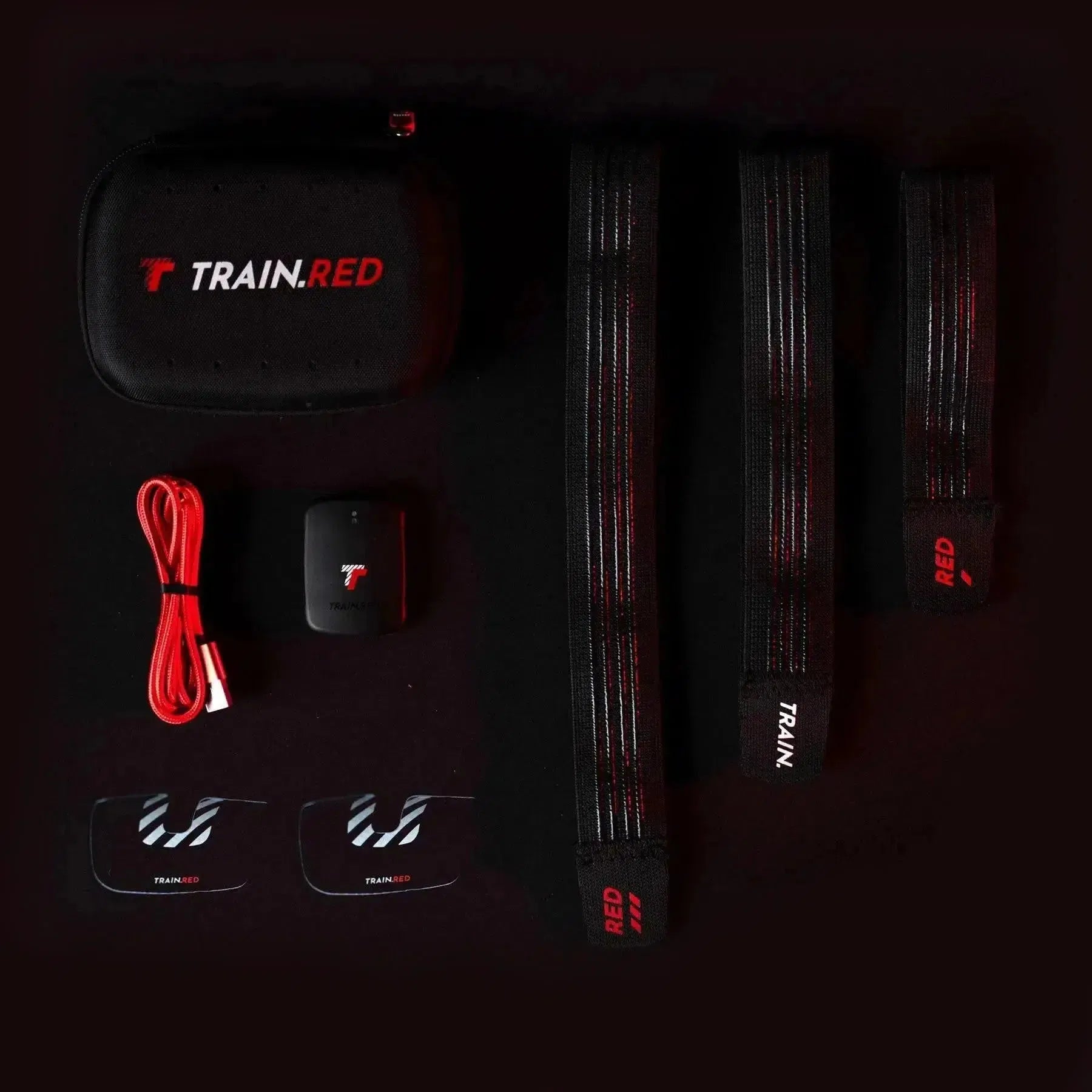
- 1x Full Set Sensor (Charging Cable, Strap Pack (S-M-L), 2 Plug and Travel Pouch)
- Free App
- Muscle Oxygen Course
Add a second sensor for bilateral or client-facing testing
- 2x Full Set Sensor (Charging Cable, Strap Pack (S-M-L), 2 Plug and Travel Pouch)
- Free App
- Muscle Oxygen Course
- 30-min 1-on-1 session
4 sensors, small groups up to full squads
- 4x Full Set Sensor (Charging Cable, Strap Pack (S-M-L), 2 Plug and Travel Pouch)
- Free App
- Muscle Oxygen Course
- 2x 30-min 1-on-1 data sessions
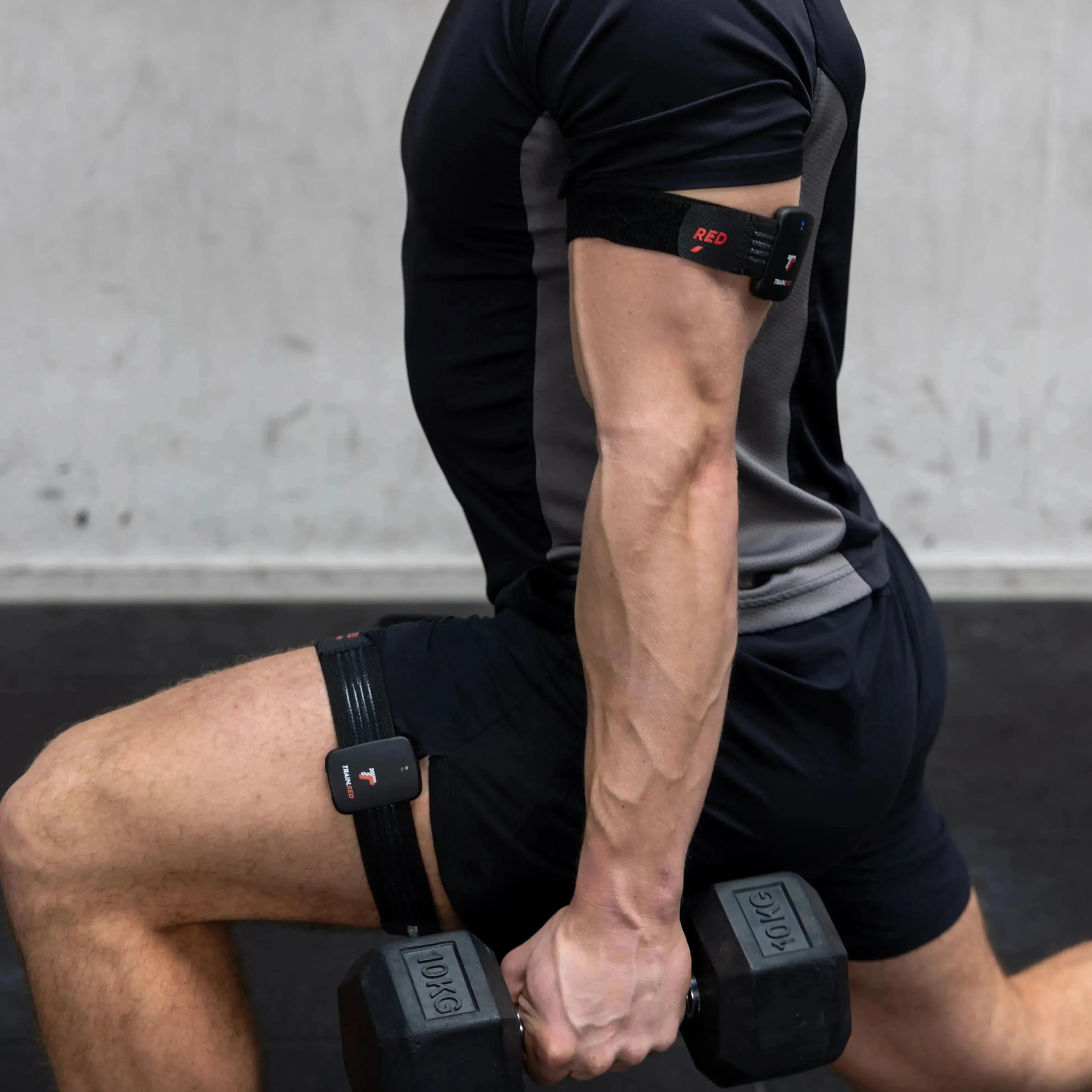
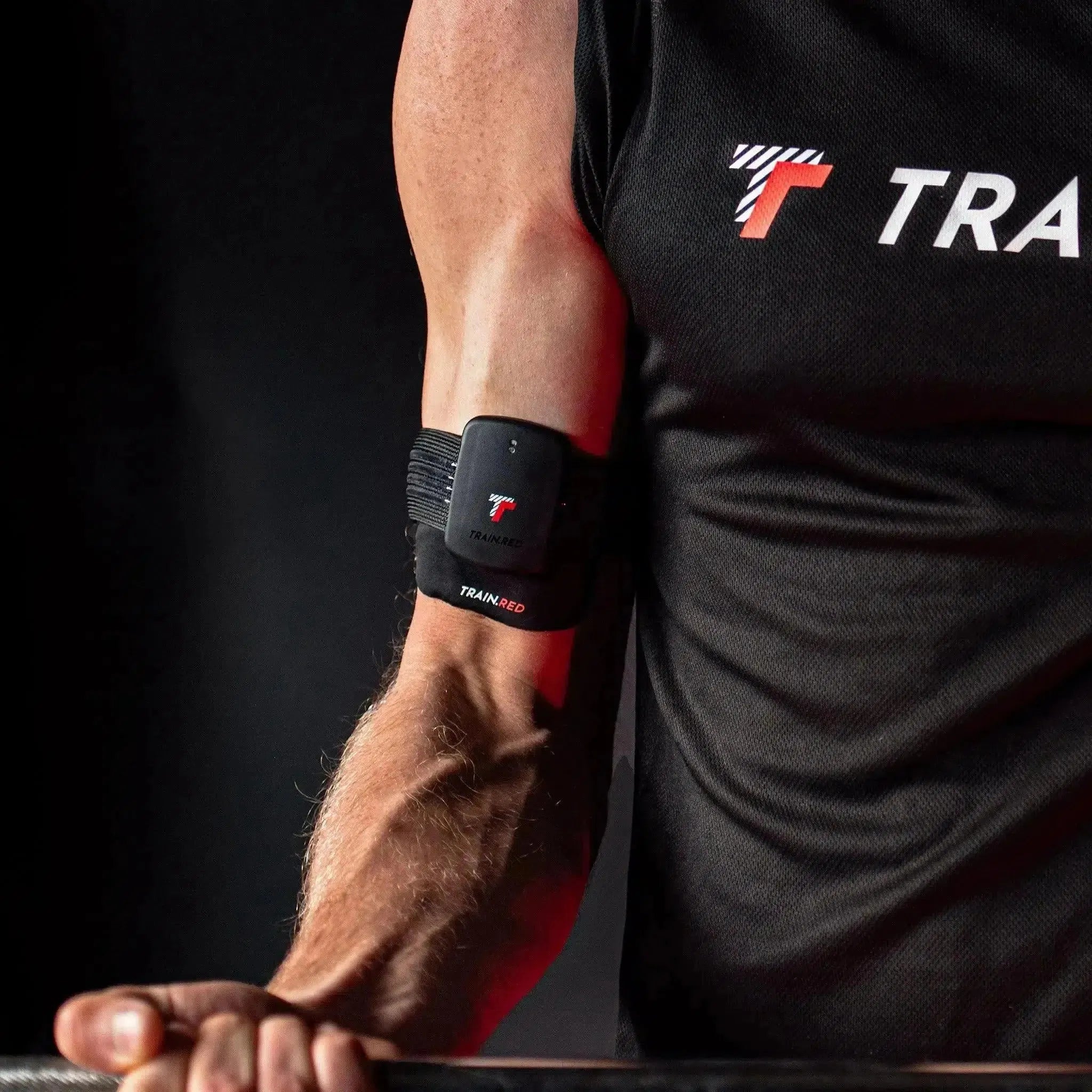
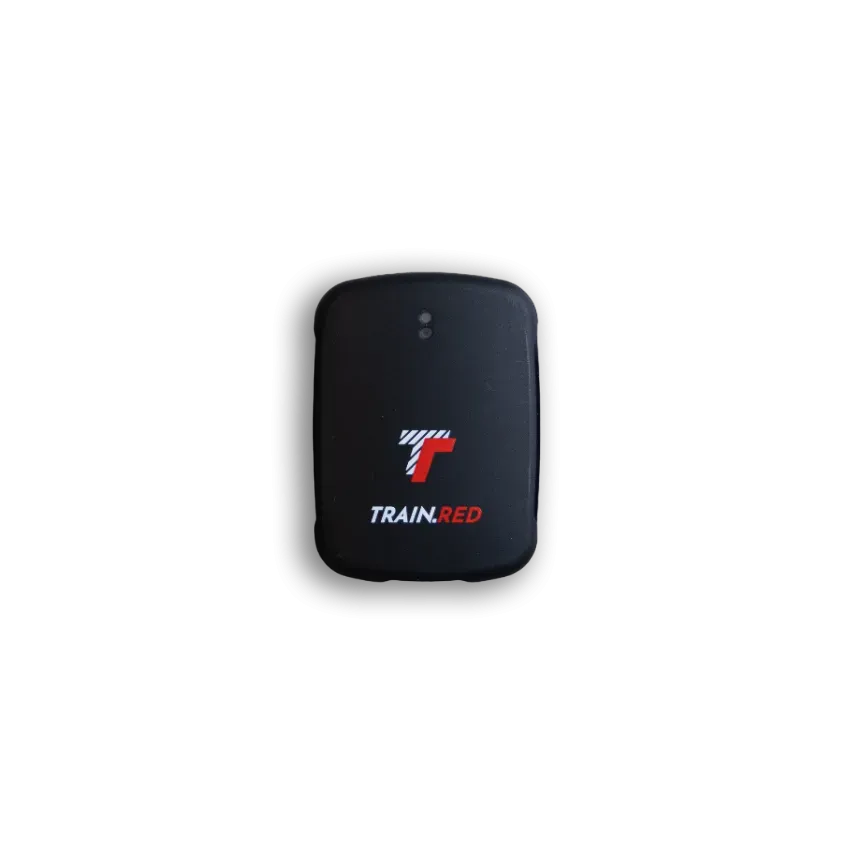
Train.Red FYER, verbessert jede sportliche Leistung auf die intelligenteste Art und Weise. Der FYER ist der kleinste und innovativste tragbare Muskelsauerstoffsensor der Welt.
Um Ihre Leistung zu verbessern, investieren Sie Zeit und Energie in Ausrüstung, standardisierte Trainingsprogramme, Nahrungsergänzungsmittel usw., aber oft vergessen wir, was unsere Leistung antreibt: unsere Muskeln
Train.Red beleuchtet Ihre Leistung basierend auf einer Lichttechnologie, der FYER blickt mit Nahinfrarot-Spektroskopie (NIRS) in Ihre Muskeln. Der Sensor übersetzt die Sauerstoffsättigung und (Des-)Oxyhämoglobin-Veränderungen in Ihrem Muskelgewebe mit Hilfe künstlicher Intelligenz und einer benutzerfreundlichen Benutzeroberfläche in Echtzeit-Schlüsselfunktionen.
Der FYER hilft jedem Sportbegeisterten, der seine Leistung verbessern möchte. Werde fitter, schneller und stärker mit Hilfe von Train.Red.
Gewinne an Kraft und/oder Ausdauer, indem du die Daten deiner Muskeln verwendest.
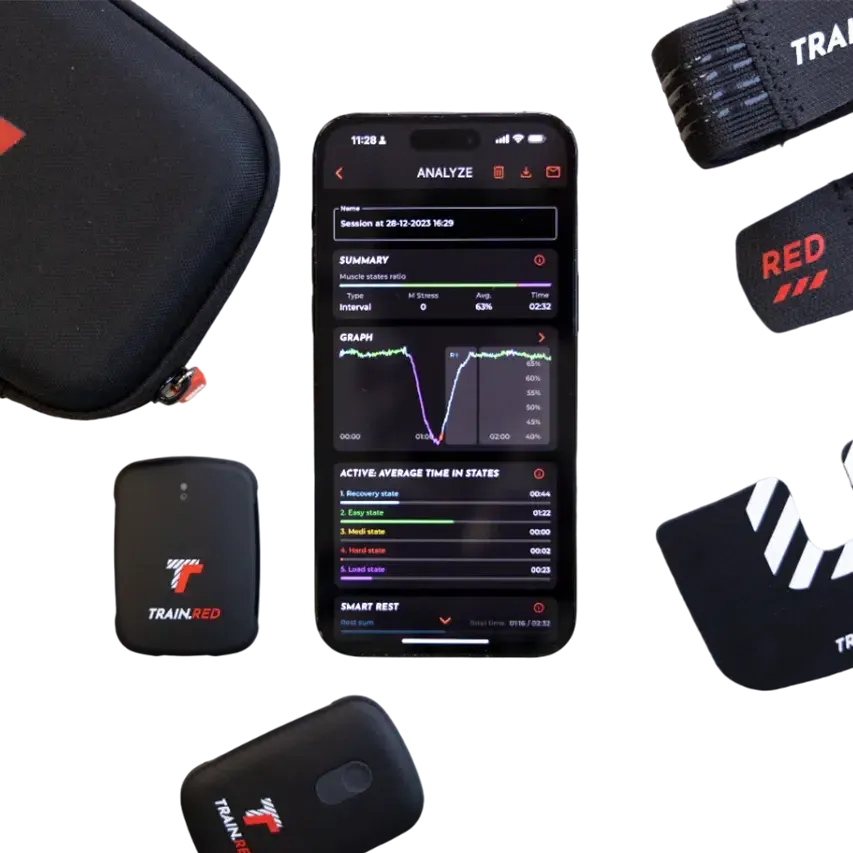
- Stellen Sie fest, ob Ihr Muskel hart oder kaum arbeitet. 5 Muskelzustände werden in Echtzeit visualisiert. Bleiben Sie bei einfachen Sitzungen im grünen Zustand oder gehen Sie bei Anstrengungen in den roten Zustand. Weitere Informationen
- Gewebesättigung, die Menge an Sauerstoff in Ihrem Muskelgewebe (%). Passen Sie Ihr Tempo in Echtzeit an oder analysieren Sie danach
- Leistungstrainer oder Hobbywissenschaftler? Messen Sie die Änderungen der Oxy- und DeOxyhämoglobin-Konzentration oder nutzen Sie das Gesamthämoglobin und die Hämoglobindifferenz zu Ihrem Vorteil.
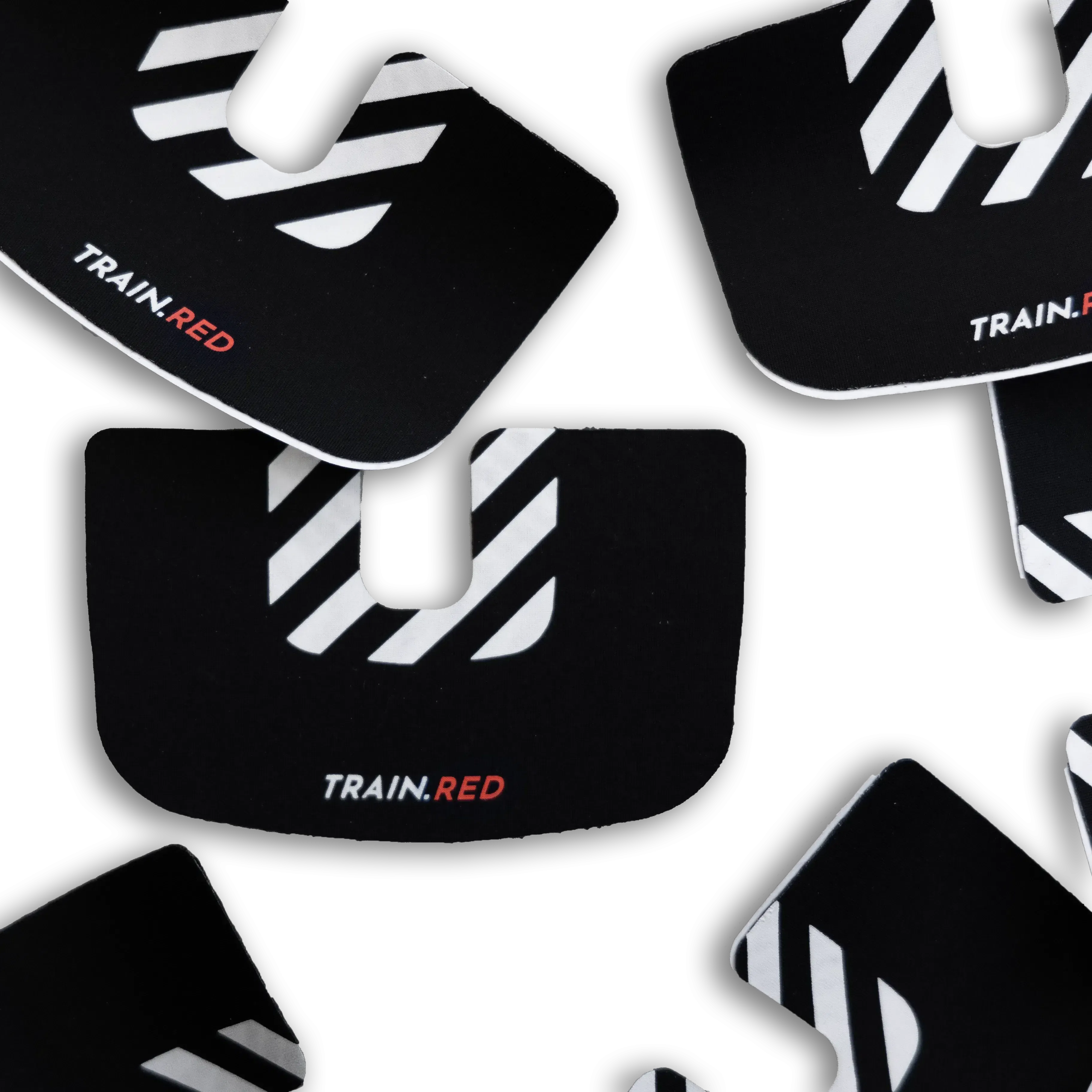
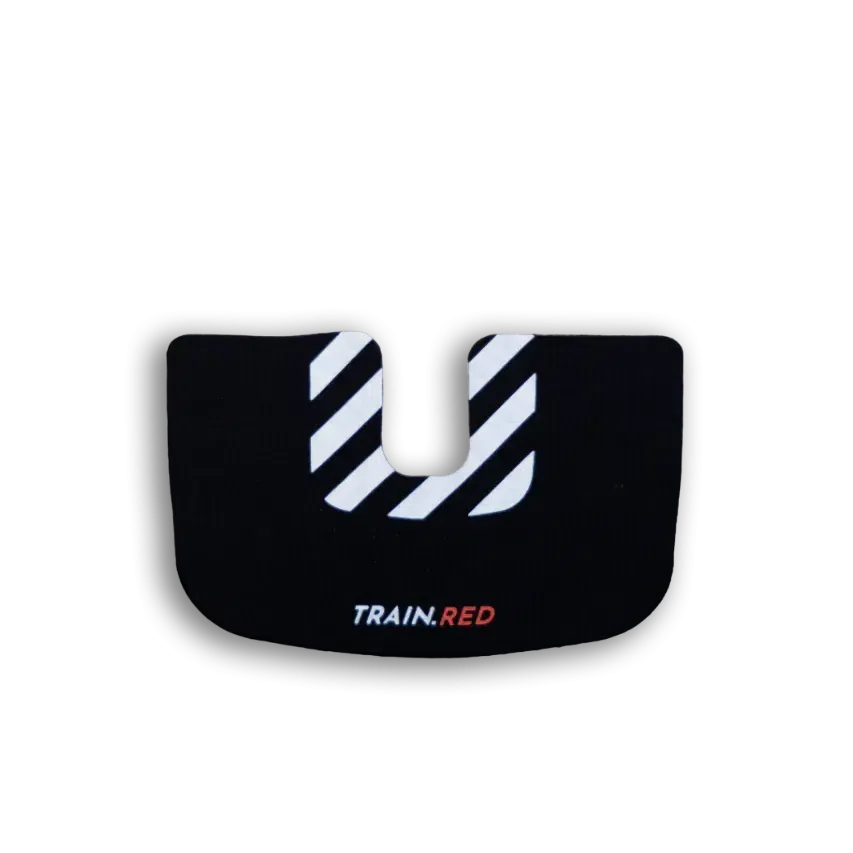
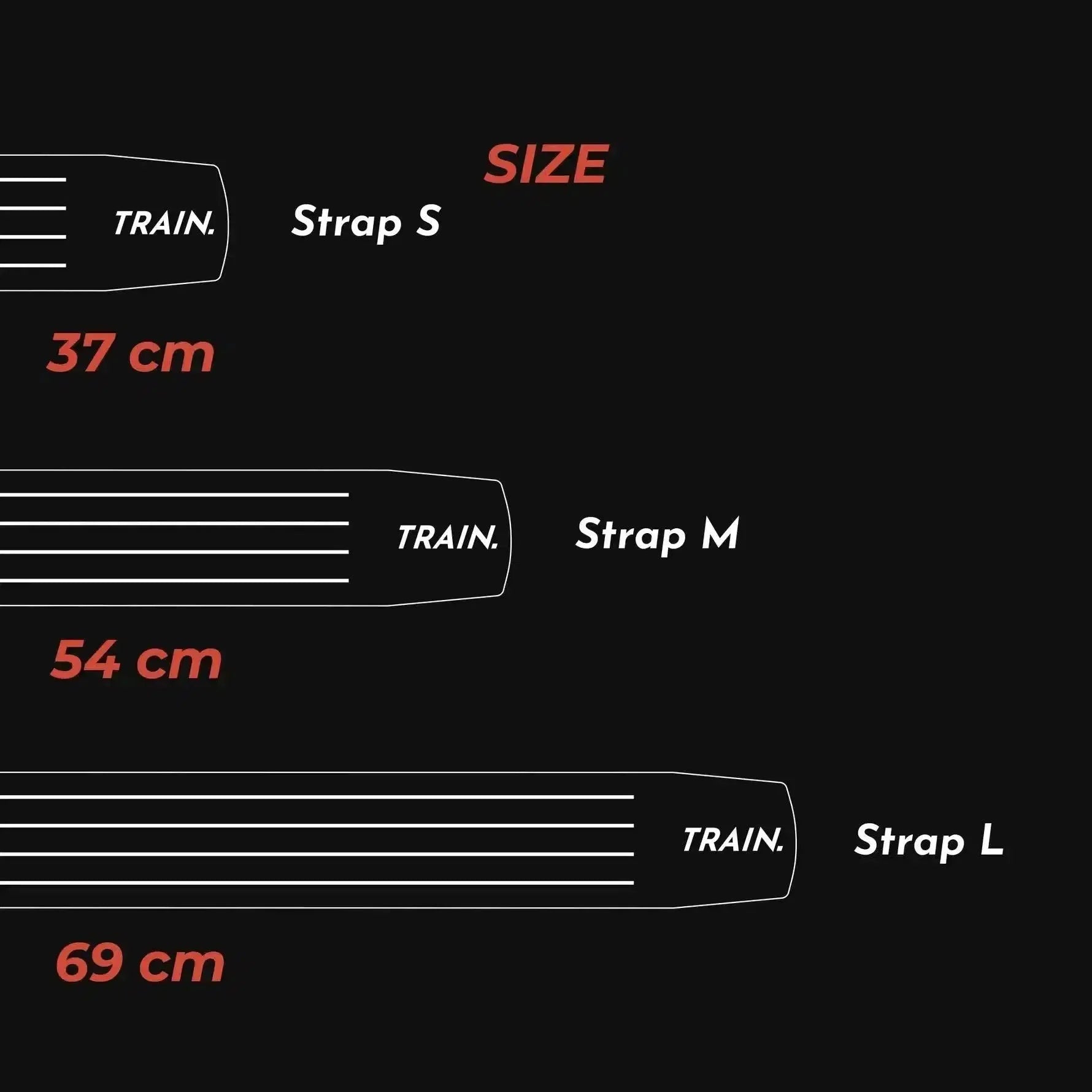
Unser Muskelsauerstoffsensor FYER wird geliefert mit: dem Train.Red FYER, einem Ladekabel, einem Patch Pack (20 Patches), einem Strap Pack (S-M-L), alles in einem strapazierfähigen EVA-Beutel.
Noch Fragen? Sprechen Sie mit einem Experten.
Alles, was Sie über den FYER wissen müssen
Train.Red verfolgt Ihren Muskel-Sauerstoffgehalt in Echtzeit mit Sensoren. Unsere intelligente App übersetzt diese Muskeldaten in Schlüsselfunktionen, um Sportler bei der Leistungssteigerung anzuleiten.
FYER BENUTZERHANDBUCHSpezifikationen
- Größe: 1,2 x 4,4 x 5,9 cm (0,5 x 1,7 x 2,3 Zoll)
- Gewicht: 20 g
- Messtiefe: Bis zu 20 mm in den Muskel
- Abstand zwischen Lichtquelle & Detektor: Bis zu 35 mm
- Wasserdicht: Ja (Schwimmen mit zusätzlichem Stopfen möglich)
- Akkulaufzeit: Bis zu 20 Stunden bei aktiver Nutzung
- Geschwindigkeit: 10 Hz
- Konnektivität: BLE & ANT+
- IMU: Gyroskop und Beschleunigungsmesser
- Interner Speicher: Ihre Daten sind jederzeit verfügbar
- Verbindung mehrerer Geräte: Verbinden Sie mehr als 10 FYER-Sensoren mit 1 Smart-Gerät für die Überwachung von Teams oder Gruppen
- Materialien: Hochwertiges biokompatibles ABS & TPE
Train.Red App
Der Train.Red FYER funktioniert am besten mit unserer Train.Red-App, die tiefgreifende Einblicke in den Muskel-Sauerstoffgehalt bietet, damit Sie intelligenter trainieren können.
📖 Lesen Sie das App-Handbuch hier.
Kompatibilität
✔️ VO2Master Manager
✔️ Splendo Health & Fit
✔️ ANT+-Profile (Garmin, Wahoo usw.)
✔️ Garmin-Datenfeldintegration
✔️ Fulgaz und mehr
Was ist Train.Red?
Train.Red entwickelt und produziert tragbare Muskelsauerstoffsensoren und -systeme, die Ihre Muskeln in Echtzeit verfolgen und mittels Nahinfrarotspektroskopie (NIRS) die Muskelsauerstoffsättigung (SmO2% oder TSI%) sowie die Hämoglobinkonzentration messen. Die meisten Trainingsgeräte decken bereits Geschwindigkeit, Arbeitsbelastung und Herzfrequenz ab. Train.Red deckt den Teil ab, den sie übersehen: was tatsächlich im Muskel passiert.
Train.Red ist ein unabhängiges Unternehmen, das von einem Kernteam mit Hintergrund bei Artinis Medical Systems gegründet wurde, dem niederländischen NIRS-Hersteller, der hinter dem aktuellen Goldstandard in diesem Bereich steht. Dort stammt die NIRS-Expertise des Gründungsteams her; es hat dieses wissenschaftliche Fundament in 20 Gramm tragbare Technik verpackt, ganz ohne Labor. Die Messung des Sauerstoffs im Muskel ist jedoch nur der Anfang. Die Coaching-Ebene von Train.Red verwandelt diese Daten in Funktionen, die jeder Athlet nutzen kann, ohne wissenschaftlichen Abschluss: wann ein Muskel ermüdet, wie lange er zur Erholung braucht, ob ein Intervall zu hart, zu leicht oder genau richtig war.
Muskelsauerstoff ist der Anfang von Train.Red, aber nicht das Ende. Der breitere Fokus des Unternehmens liegt auf der menschlichen Leistungsfähigkeit als Ganzes, sowohl körperlich als auch kognitiv, was Train.Red über ein breiteres Feld als nur die Muskelüberwachung stellt: Sportlabore, körperliche Leistungsfähigkeit, Wellness und Gesundheit. Der Grundgedanke dahinter bleibt derselbe, egal welches System misst: Jeder sollte in der Lage sein, vom Potenzial seines eigenen Körpers zu profitieren und diese Daten zu nutzen, um tatsächlich bessere Leistungen zu erbringen.
FYER vs. FYER PRO vs. PLUS 2.0: Was ist der Unterschied?
Die drei Muskel-Sauerstoffmonitore von Train.Red, FYER 2.0, FYER PRO und PLUS 2.0, basieren auf zwei unterschiedlichen NIRS-Designs:
FYER 2.0 & FYER PRO (Line-Sensor-Technologie): Diese Modelle nutzen die hauseigene Line-Sensor-Technologie von Train.Red. Ein Line-Sensor besteht aus einer Reihe winziger Lichtempfänger anstelle eines einzelnen festen Detektors. Er funktioniert ähnlich wie die Verschlusszeit einer Kamera: Wenn der Muskel viel Licht reflektiert, verkürzt der Sensor die Dauer, während der die Empfänger aktiv sind; ist das Signal schwach, verlängert er dieses Belichtungsfenster und passt die Ausgangsleistung des Senders entsprechend an. Diese konstante Selbstkalibrierung sorgt für präzise Messwerte bei unterschiedlichem Muskelgewebe, Hauttönen und Durchblutungsverhältnissen.
FYER 2.0: Wiegt 20 Gramm, ist IPX7-wasserdicht und misst SmO2 mit 10 Hz. Die Akkulaufzeit beträgt etwa 20 Stunden pro Ladung. Er liefert den SmO2-Wert direkt, ohne die vollständige Hämoglobin-Aufschlüsselung.
FYER PRO: Teilt sich das gleiche leichte, wasserdichte Gehäuse wie der FYER 2.0, tastet jedoch mit bis zu 100 Hz ab. Er ergänzt die Anzeige neben dem SmO2-Wert um O2Hb, HHb, tHb und HbDiff.
PLUS 2.0 (Goldstandard-Forschungssensor): Nutzt die NIRS-Technologie des Goldstandards, wie sie in klinischen Systemen und in der Forschung eingesetzt wird, und ist intern an physischen Gewebemodellen (Phantomen) kalibriert. Er verfügt über sechs Messkanäle anstelle von einem, was Messungen in einer größeren Gewebetiefe oder die gleichzeitige Abdeckung mehrerer Muskelstellen für eine umfassende Stoffwechselanalyse ermöglicht. Er wiegt 26 Gramm, ist IPX4-schweißresistent und hält etwa 12 Stunden pro Ladung durch.
Alle drei Geräte speisen ihre Daten über BLE/ANT+ in dieselbe kostenlose App und die Muscle States-Coaching-Ebene ein. Jeder Sensor stellt seine vollständigen Rohdaten bereit, doch die App ist darauf ausgelegt, aus „SmO2 auf 42 % gefallen“ ein „Tempo jetzt drosseln, bevor Sie es spüren“ zu machen.
SmO2 vs. Herzfrequenz: Warum ist Muskel-Sauerstoffsättigung bei Intervallen wichtiger?
Die Herzfrequenz gibt an, wie hart Ihr Herz arbeitet; sie sagt jedoch nichts darüber aus, wie es Ihrer Muskulatur tatsächlich geht. Es ist ein Wert für den gesamten Körper, der dem tatsächlichen Geschehen hinterherhinkt und durch Koffein, Hitze, Schlaf oder Stress beeinflusst wird – Faktoren, die in diesem speziellen Moment kaum etwas mit Ihren Oberschenkeln zu tun haben.
SmO2 umgeht all das. Es zeigt Muskel für Muskel, ob die Sauerstoffversorgung aktuell mit dem Sauerstoffbedarf Schritt hält. Ein Athlet kann eine lokale Ermüdung erkennen, bevor sie sich in Tempo oder Leistung niederschlägt, seinen tatsächlichen physiologischen Begrenzungsfaktor anstelle eines Ersatzwerts identifizieren und Belastungs- sowie Erholungsintervalle genau auf die Bedürfnisse des Muskels abstimmen.
Wie misst ein Muskel-Sauerstoffsensor den SmO2-Wert akustisch?
Es strahlt nahinfrarotes Licht durch die Haut in den Muskel und liest aus, wie viel von diesem Licht zurückgeworfen wird. Oxygeniertes und desoxygeniertes Hämoglobin absorbieren nahinfrarotes Licht bei leicht unterschiedlichen Wellenlängen. Durch die Messung des reflektierten Lichts ermittelt der Sensor das Verhältnis zwischen beiden. Dieses Verhältnis ist die SmO2, ausgedrückt als Prozentsatz.
Die Messung erfolgt kontinuierlich und nicht-invasiv, direkt am Muskel. Das bedeutet, sie erfasst, was in diesem speziellen Gewebe geschieht, während es geschieht, und ist keine Schätzung, die von einer anderen Stelle im Körper abgeleitet wurde. Train.Red wendet dieses Prinzip, das über Jahrzehnte der NIRS-Forschung verfeinert wurde, in einem Paket an, das für das Training und nicht für den Labortisch konzipiert ist.
Kunden kauften auch

Fyer Unboxing